

Why Central Air Matters When Choosing Your Next Apartment

Apartments with central air offer a level of comfort and convenience that window units and portable air conditioners simply can't match. If you're searching for rental properties with this feature, here's what you need to know:
Quick Guide to Finding Central Air Apartments:
- Use apartment search filters - Most rental sites like Apartments.com let you filter by "air conditioning" or "central air"
- Verify the system type - Ask property managers whether units have individual HVAC systems or centralized building-wide cooling
- Check during your tour - Look for thermostats in each unit and ceiling or wall vents (not just window sleeves)
- Read the lease carefully - Confirm which cooling systems are included and who handles maintenance
According to rental listing data, major cities show strong availability of air-conditioned units. Toronto has over 7,500 apartments with AC, Chicago offers more than 3,400 options, and even dense urban markets like Midtown Manhattan feature nearly 2,000 rentals with cooling systems.
Central air provides consistent temperature control throughout your entire living space, eliminates the noise and visual clutter of window units, and often includes built-in air filtration. For renters in warm climates like San Diego, this amenity transitions from a luxury to a practical necessity.
The right HVAC system can reduce energy costs by 20-49% compared to older cooling methods. Modern apartments increasingly feature centralized or individual climate control systems designed for multi-unit buildings, giving residents personalized comfort without sacrificing efficiency.
The Benefits of Living in Apartments with Central Air
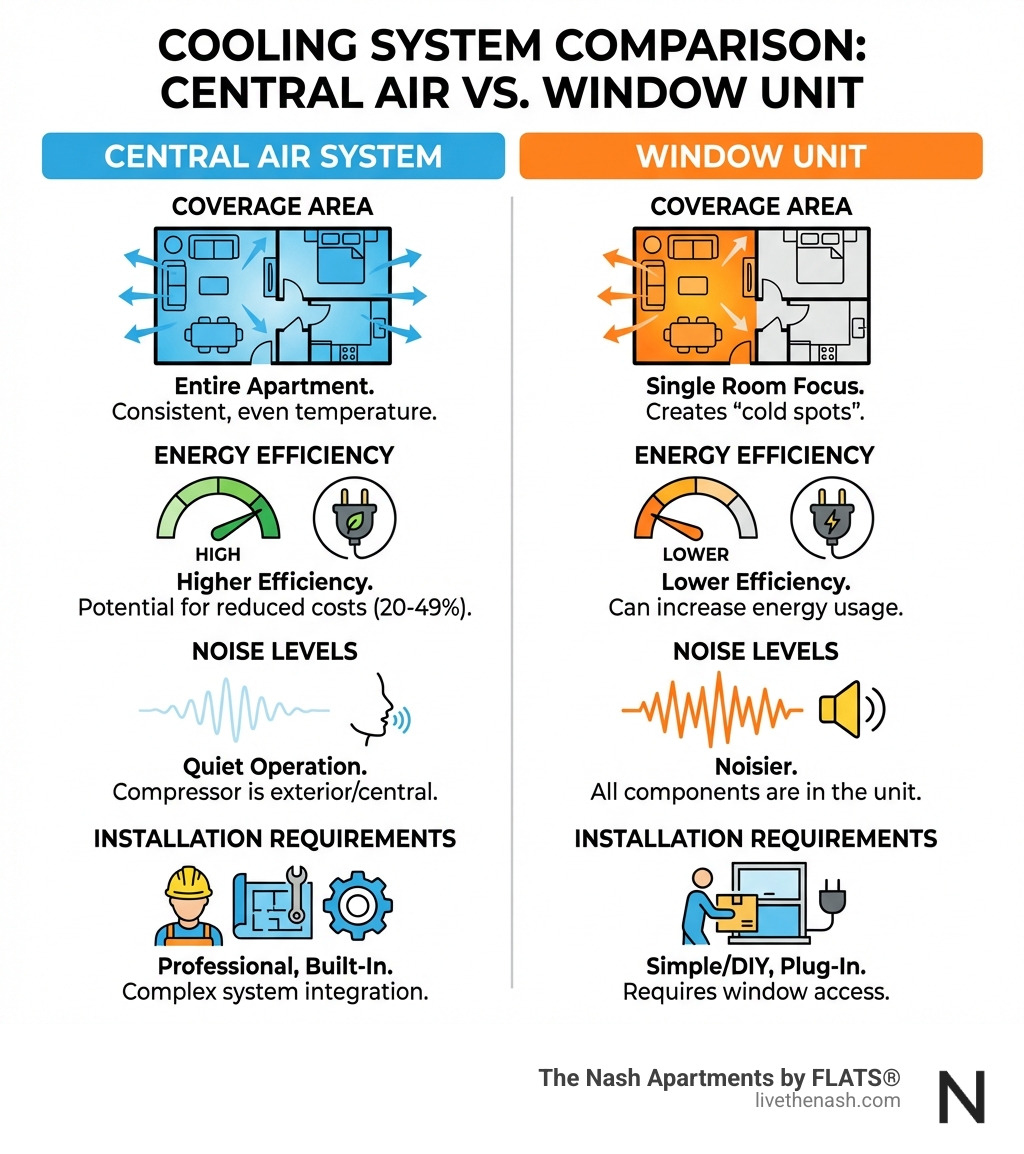
When we talk about Apartments with Central Air, we aren't just talking about staying cool during a San Diego heatwave. Centralized climate control offers a holistic approach to indoor comfort. Unlike window units that create "cold spots" right in front of the machine while leaving the bedroom sweltering, central air uses a network of ducts to distribute air evenly.
One of the most overlooked benefits is humidity control. High humidity can make a room feel much warmer than it actually is and can lead to issues like musty odors. A central system effectively pulls moisture from the air as it cools, creating a crisp, comfortable environment. Furthermore, because these systems use high-quality filters, they help remove dust and allergens from the air, which is a major win for anyone with sensitive sinuses.
Energy Efficiency in Apartments with Central Air
Efficiency is where apartments with central air really shine. Modern systems are rated using SEER (Seasonal Energy Efficiency Ratio); the higher the rating, the less energy the system uses to cool your home. When paired with Apartments with Smart Home Technology, residents can use programmable thermostats to adjust temperatures based on their daily schedule.
By reducing utility usage through optimized cooling cycles and better insulation found in newer developments, these systems are much kinder to the environment. We find that buildings utilizing variable speed air handlers provide even more consistency, as they don't have to "blast" on and off but can instead maintain a steady, low-energy flow.
Improved Property Value and Desirability
From a resident's perspective, central air is one of the most sought-after Upscale Apartment Amenities. It signals that a building is modern and well-maintained. High rental demand often centers around properties that offer a "plug-and-play" lifestyle where comfort is guaranteed. Resident satisfaction tends to be higher in these buildings because the noise levels are significantly lower than those associated with rattling window compressors.
5 Categories of the Best Central Air Apartments for Rent
Finding the right cooling setup depends on the type of building you prefer. Different architectural styles require different HVAC solutions to keep things breezy.
| Feature | Individual HVAC Systems | Centralized Building Systems |
|---|---|---|
| Control | Resident has full 24/7 control | Often controlled by building management |
| Maintenance | Usually handled by onsite staff | Handled by specialized contractors |
| Space | Requires a closet for air handler | No equipment inside the living area |
| Efficiency | Depends on resident usage | Highly efficient for large scale |
1. Luxury High-Rises with Centralized HVAC
For those who love San Diego Luxury Apartment Homes, high-rise living often comes with sophisticated centralized systems. In buildings over six floors, it is common to see large Rooftop Units (RTUs) or basement chillers. These systems often use "vertical stacks" or fan coil units to move air through the building. This setup is incredibly efficient for cooling hundreds of units simultaneously and ensures that the mechanical "hum" stays far away from your sleeping area.
2. Modern Lofts with Contemporary Climate Control
Modern lofts are famous for their Luxury Apartment Finishes, such as exposed brick and high ceilings. To keep these open floor plans comfortable, developers often use integrated cooling systems with spiral ductwork that adds to the industrial aesthetic. These systems are designed to move large volumes of air through wide-open spaces, ensuring that your kitchen is just as cool as your living room.
3. Smart-Integrated Units with Individual Control
Many Modern Apartments in San Diego now offer individual control through heat pumps or split systems. This is ideal for the resident who wants a personalized climate. With smart integration, you can monitor your energy usage from your phone and ensure the air is perfectly chilled the moment you arrive home from work.
4. New Developments with Advanced HVAC Solutions
Newer Modern Apartments San Diego are often built with sustainability in mind. These buildings might use water-source heat pumps or advanced VRF (Variable Refrigerant Flow) systems. These are among the quietest systems available, meaning you can enjoy a movie or a nap without the background noise of a traditional AC unit.
5. Renovated Historic Buildings with Modern Central Air
Preserving history doesn't mean you have to sweat. Renovated buildings often use creative solutions like ductless mini-splits or thin-profile high-velocity ducting to bring modern comfort to classic architecture. These units often pair well with an Apartments with Large Windows Guide because they allow for massive, beautiful windows to remain unobstructed by bulky window AC units.
Understanding HVAC Systems in High-Rise Buildings
In high-rise living, the HVAC system is a feat of engineering. For buildings that stand taller than six stories, a centralized system is usually the gold standard. These often involve Rooftop Units (RTUs) that serve the entire building or large Air Handling Units (AHUs) that can range from 1.5 tons to over 20 tons in capacity.
One common solution in high-rises is the fan coil unit. These units use water lines—either chilled or heated—to regulate the temperature. Another popular option is the water source heat pump, a two-pipe system that circulates water throughout the building to provide flexible heating and cooling zones.
HVAC Solutions for Low-Rise Buildings
For low-rise buildings (typically under six floors), the options change. If the building has existing ductwork, a centralized unit is often preferred. However, in many Apartments with Modern Amenities that lack traditional ducts, individual condensers or split systems are the way to go.
In a 3-floor walk-up, for instance, you might see "multi-zone" heat pumps where one outdoor condenser supports multiple indoor units. This allows each resident to have full control over their own temperature, which is a feature many of us prefer.
How to Find and Verify Climate Control Amenities
When searching for Apartments for Rent in San Diego CA with Air Conditioning, the digital tools available today make it much easier. Most major listing sites offer specific filters for "Air Conditioning." However, "Air Conditioning" can sometimes mean a window unit. To ensure you are getting apartments with central air, look for keywords like "Central Heat and Air" or "HVAC."
Virtual tours are also a great way to verify. While "walking" through the unit online, look at the ceilings and the tops of the walls. If you see narrow, rectangular vents and a digital thermostat on the wall, you are likely looking at a central system.
Verifying Apartments with Central Air in Listings
Don't be afraid to dig deeper into an Upscale Apartment Amenities Guide. When you contact property management, ask specifically: "Is the air conditioning central or a wall/window unit?" and "Do I have individual control over the thermostat?" On-site tours are the ultimate verification; you can feel the airflow and hear the system's volume for yourself.
Tenant Rights and Accommodation Requests
In certain regions, such as Ontario, there are specific legal frameworks regarding air conditioning. Under the Ontario Human Rights Code, landlords may be obligated to accommodate a tenant's disability—which could include a medical necessity for air conditioning—unless it causes "undue hardship."
If you find yourself in a situation where you need accommodation, the process usually involves:
- Providing a written request to your landlord.
- Including a medical note explaining the need for climate control.
- Seeking resources through organizations like www.hrlsc.on.ca.
Landlords can only deny such requests if they can prove that the cost would threaten the business's survival or create significant health and safety risks.
Frequently Asked Questions about Apartments with Central Air
What is the difference between central air and a wall unit?
Central air uses a system of ducts to move air throughout the entire apartment, controlled by a single thermostat. A wall unit (or window unit) is a self-contained device that only cools the immediate area where it is installed. Central air is quieter, more efficient, and provides more even cooling.
Who is responsible for maintaining the HVAC system in a rental?
In most standard lease agreements, the landlord or property management company is responsible for the maintenance and repair of the HVAC system. This includes changing filters and ensuring the mechanical components are functioning. As a resident, your responsibility is typically to report any issues promptly.
Does central air conditioning increase the monthly rent?
While we don't discuss specific pricing, it is a general industry fact that buildings with premium amenities like central air are highly desirable. The value comes from the increased comfort, lower noise levels, and the potential for better energy efficiency compared to older cooling methods.
Conclusion
Finding the perfect home means prioritizing your comfort. Choosing Luxury Living San Diego often means looking for San Diego Upscale Living options that provide the best in climate technology. Whether you are looking for Luxury Apartments for Rent in San Diego CA or a cozy spot in a historic neighborhood, central air is a game-changer.
At The Nash Apartments by FLATS®, we offer luxury living at the vibrant intersection of University Heights and North Park. Our community is designed for those who appreciate the finer things, from our rooftop lounge with city views to our two-story fitness center and poolside cabanas. We understand that pets are family, which is why we welcome up to two pets per home. If you're ready to experience a stylish, climate-controlled lifestyle with amenities like EV chargers and an open-air game room, we invite you to Explore our luxury amenities and find your new home with us.