

Is a Clothes Washer and Dryer in One Worth It?
A clothes washer and dryer in one is exactly what it sounds like — a single machine that washes and dries your laundry without you ever moving a load. Here's a quick breakdown to answer the key question right away:
Who should get one:
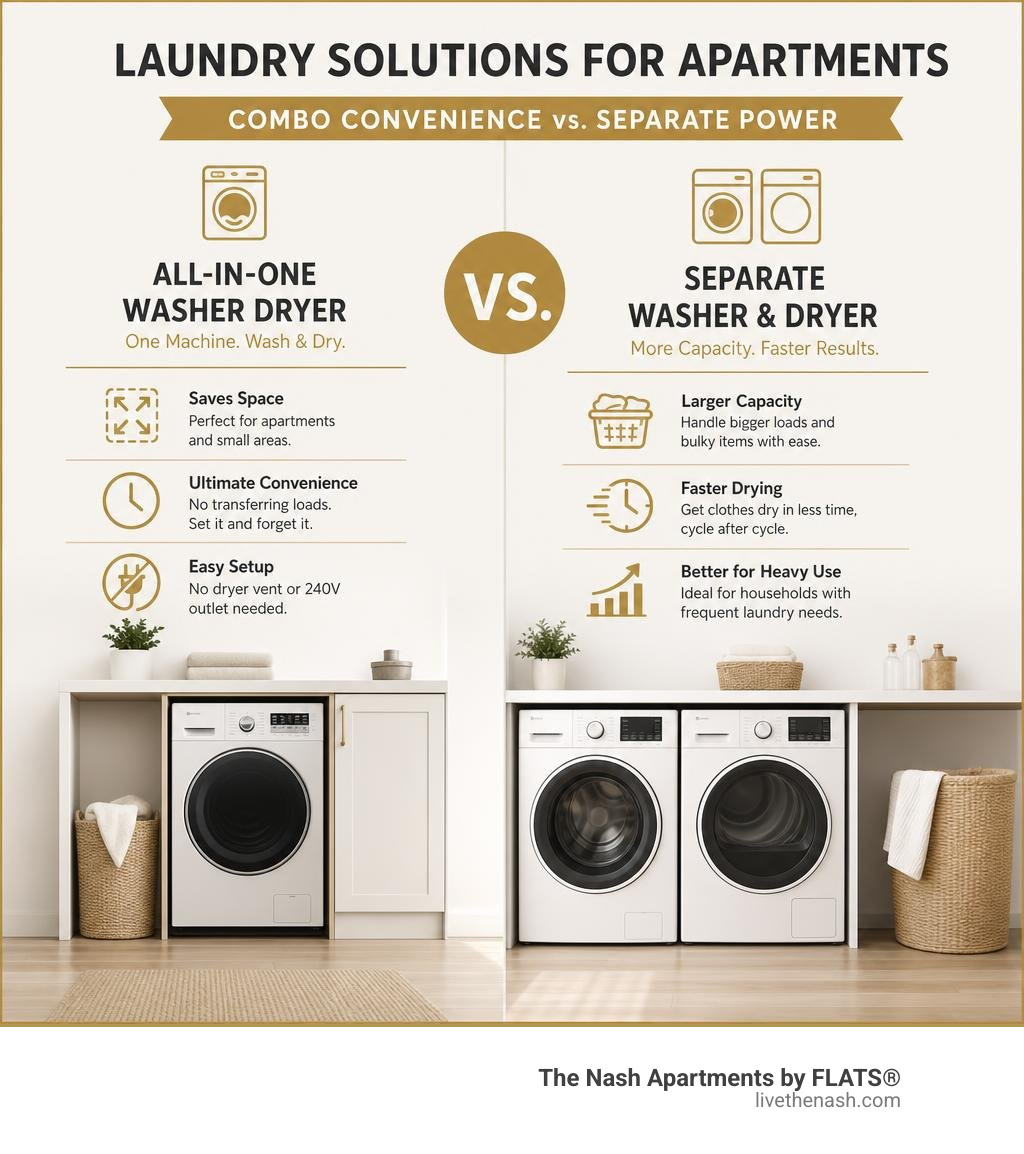
- People in apartments or small spaces without room for two machines
- Anyone who wants to skip the step of transferring wet clothes
- Those who don't have access to a dryer vent or 240V outlet
Who might want separate machines:
- Households doing large, back-to-back loads daily
- Anyone who needs faster drying times
- People who regularly wash bulky items like comforters
The concept is simple but the trade-offs are real. On the convenience side, these machines handle everything in one drum — no babysitting the cycle, no forgetting wet clothes in the washer. (Research shows the average person leaves laundry sitting in the washer for over two hours before moving it to the dryer.)
On the downside, drying a single load can take over three hours, and the drum sizes are smaller than a standard dryer.
This guide breaks down how these machines work, what they cost to run, which models stand out, and whether one makes sense for your space.
What is a Clothes Washer and Dryer in One and How Does It Work?
At its core, a clothes washer and dryer in one simplifies your laundry routine by combining two major household appliances into a single footprint. Instead of shifting heavy, damp garments from one machine to another, you load your dirty laundry, select your cycle, and return to clean, dry clothes.
These units utilize a single-drum design that operates much like a standard front-load washing machine. During the wash phase, the drum tumbles your clothes through water and detergent, using high-efficiency front-load mechanics to lift and clean fabrics gently. Once the rinse and spin cycles finish, the machine does not stop. Instead of waiting for you to transfer the load, the internal system automatically transitions into its drying phase.
By eliminating the manual transition, these machines prevent a common laundry headache: letting wet clothes sit. Since consumers leave clothes in the washer for an average of 130 minutes before transferring them to the dryer, this automation prevents sour odors and mildew from developing when life gets busy.
Condenser vs Heat Pump Drying Technologies
Traditional standalone dryers rely on a heavy flow of heated air that is subsequently exhausted outside through a large foil or plastic duct. Because all-in-one combo machines are built to be ventless, they must handle moisture differently. They achieve this using one of two primary technologies: condenser drying or heat pump drying.
Condenser drying systems work by heating the air inside the drum to draw moisture out of your garments. This warm, moist air is then directed through a condensing chamber, where cool water or a heat exchanger cools the air down rapidly. As the air cools, the moisture condenses back into liquid water, which is pumped out through the washing machine’s standard drain hose. The dry air is then reheated and recirculated back into the drum.
Heat pump drying is a highly advanced, closed-loop system that acts like a miniature air conditioner running in reverse. Instead of constantly heating new air, a heat pump system recirculates the existing air in a closed loop. It uses a compressor and refrigerant to extract heat from the damp air, which causes the moisture to condense out. The system then reheats that same dry air and sends it back into the drum.
This closed-loop design is incredibly efficient. All-in-one washer-dryer combos with heat pump dryers use at least 28 percent less energy than a standard dryer. Premium models, such as the LG SIGNATURE Ventless Washer/Dryer Combo - WM9998HBA | LG USA , utilize advanced dual inverter heat pump technology to optimize temperatures and airflow, while smart options like the Samsung Series 6 AI Energy WD90DG6B85BBU1 WiFi-enabled, Washer Dryer, 9kg - Black Black | Samsung UK use artificial intelligence to monitor fabric weight and moisture levels, minimizing energy waste.
Typical Cycle Times for a Clothes Washer and Dryer in One
While the convenience of a single-unit system is unmatched, cycle duration is the most significant trade-off. Because ventless drying technologies rely on lower temperatures to protect fabrics and conserve energy, drying times are naturally longer than those of traditional gas or high-voltage electric vented dryers.
For a standard 12-pound laundry load, a high-efficiency heat pump combo unit can take around 3.5 hours to complete a full wash and dry cycle. Smaller loads, such as an 8-pound load, typically require over 2 hours to dry completely. However, manufacturers continue to make massive leaps in performance. Some modern high-capacity combos can run a complete wash and dry cycle in as fast as 2 hours for a 10-pound load without any physical intervention.
To help you visualize how these times compare to traditional setups, we have compiled a comparison of typical cycle durations:
| Laundry Setup | Wash Cycle Time | Dry Cycle Time | Total Time (No Transfer Delay) |
|---|---|---|---|
| All-in-One Combo (Heat Pump) | 30 – 45 mins | 90 – 150 mins | 2.0 – 3.5 hours |
| All-in-One Combo (Condenser) | 30 – 45 mins | 120 – 180 mins | 2.5 – 4.0 hours |
| Separate Wash & Vented Dry | 30 – 45 mins | 45 – 60 mins | 1.5 hours (requires manual transfer) |
Most modern combo units utilize advanced sensor dry technology. Rather than running on a simple timer, the machine constantly monitors the moisture level inside the drum. Once the sensors detect that your clothes are dry, the cycle automatically stops, preventing fabric damage from over-drying and saving unnecessary energy usage.
Pros and Cons of All-in-One Laundry Units
Investing in a clothes washer and dryer in one requires weighing your household's physical space against your daily laundry habits. For many, the physical footprint reduction is the ultimate deciding factor. By combining two bulky appliances into one, you reclaim precious square footage in your home. Additionally, because these units are ventless, they do not require complex external ductwork, giving you the freedom to place them in locations where traditional laundry setups simply cannot go.
Utility efficiency is another major benefit, particularly with heat pump models. Because they run on standard residential outlets and recirculate air, they draw significantly less power than traditional standalone dryers. However, the primary limitation is multitasking. With separate machines, you can wash a second load of laundry while the first load is drying. With an all-in-one unit, the machine is occupied for the entire wash-and-dry sequence, meaning back-to-back laundry days will take longer to complete.
Key Advantages of Single-Unit Systems
The most celebrated benefit of an all-in-one combo is the "one-and-done" workflow. You can load dirty clothes before heading out to work or going to bed, and return to fresh, dry garments. There is no risk of wet clothes sitting in the drum for hours, which eliminates the need to re-wash forgotten loads.
For those living in modern apartments, these machines are a game-changer. Reclaiming closet or utility space allows for more comfortable living areas. If you are exploring compact housing options, choosing an Apartment Size Washer Dryer Combo can help you maximize your floor plan. These space-saving appliances are frequently featured in Apartments with Modern Amenities, where smart design and functional living are top priorities.
Limitations of a Clothes Washer and Dryer in One
While the benefits are clear, it is important to understand the physical limitations of these appliances. The most notable limitation is drying capacity. Although a combo unit's drum size might range from 4.5 to 5.3 cubic feet—which is plenty of space for a standard washing machine—dryers naturally require more physical space for air to circulate around the clothes. Consequently, while you can fill the drum to capacity for a wash-only cycle, you must reduce the load size if you want the machine to dry the clothes efficiently in the same run.
Additionally, because the drying process takes longer, you must plan your laundry schedule accordingly. If you have a large household that generates multiple loads of laundry daily, the inability to wash and dry simultaneously can create a bottleneck. Finally, because these machines house complex mechanical systems for both washing and drying within a single chassis, repairs can sometimes be more complex than servicing a basic standalone washer or dryer.
Installation and Space Requirements for Ventless Systems
One of the greatest engineering triumphs of the modern ventless clothes washer and dryer in one is how incredibly easy it is to install. Traditional dryers require a dedicated 240-volt electrical outlet and a heavy-duty exhaust duct routed through an exterior wall. Ventless combo units bypass these requirements entirely.
Most ventless heat pump and condenser combos operate on a standard 120-volt residential outlet. This means you do not need to hire an electrician to run specialized high-voltage wiring to your laundry area. Because they do not exhaust hot, moist air, there is no need for external ducting or wall penetrations.
The physical installation requirements are straightforward:
- A standard 120V electrical outlet
- Access to a cold and hot water line (standard washing machine hookups)
- A drain pipe or utility sink to discharge the wastewater extracted during both the wash and dry cycles

Ideal Layouts for Compact Living Spaces
Because these machines do not require external venting, they can be installed in creative layouts throughout your home. Traditional laundry rooms are no longer necessary. You can easily integrate an all-in-one unit into a bathroom linen closet, tuck it under a kitchen countertop, or place it in an under-stairs storage nook.
If you are trying to find the perfect fit for a tight layout, looking into the Best Apartment Washer Dryer Combo Ventless options will give you an idea of which models offer the shallowest depths. For vertical spaces where floor area is at a premium, an Apartment Size Stackable Washer and Dryer Ventless setup can provide a similar ventless benefit while utilizing vertical real estate.
Frequently Asked Questions About Washer-Dryer Combos
Are all-in-one washer-dryer combos energy efficient?
Yes, modern all-in-one washer-dryer combos are exceptionally energy efficient, particularly those equipped with Inverter HeatPump technology. Because they recycle the warm air inside the drum rather than constantly heating cold air from the room and venting it outside, they consume a fraction of the electricity used by traditional dryers.
Many models carry high Energy Star ratings, proving their ability to lower household utility consumption. For smaller spaces, compact options like the 2.4 cu.ft. Front Load All-In-One Washer/Dryer - WM3555HWA combine smart front-load washing mechanics with sensor-driven ventless drying to keep energy usage to an absolute minimum.
What capacity options are available for combo units?
All-in-one units come in a wide range of sizes to suit different household needs. Compact models typically feature a drum capacity of 2.3 to 2.4 cubic feet, which is perfect for individuals, couples, or small closets. A great example of a space-saving compact option is the 2.3 cu.ft. Compact All-In-One Washer/Dryer - WM3488HW.
For larger households, mid-sized and mega-capacity options are widely available, ranging from 4.5 to 5.8 cubic feet. These larger drums can easily accommodate queen- or king-sized comforters and larger weekly laundry loads, bringing the capacity in line with standard standalone washing machines.
What maintenance is required for a washer-dryer combo?
To keep your machine running at peak efficiency, regular maintenance is essential:
- Clean the lint filter: Because ventless systems recirculate air, keeping the lint filter clean is critical for maintaining airflow and fast drying times. Some models feature self-cleaning lint systems, while others require manual cleaning after every load.
- Wipe the rubber gasket: After a cycle, water and lint can collect in the folds of the door's rubber gasket. Wiping it down with a dry cloth prevents mold and musty smells.
- Run the self-clean cycle: Most modern units feature a dedicated tub-cleaning cycle. Running this cycle once a month with a recommended washing machine cleaner keeps the drum fresh and free of detergent buildup.
Conclusion
A clothes washer and dryer in one represents the peak of modern laundry convenience, offering an elegant, space-saving solution for contemporary homes. By combining washing and drying into a single, automated process, these units eliminate the chore of transferring heavy laundry loads while drastically reducing the physical space required for appliance installation.

For residents seeking upscale, convenient living, having access to modern, space-saving appliances is key. At The Nash Apartments by FLATS®, located at the vibrant intersection of San Diego's University Heights and North Park neighborhoods, we design our luxury apartments to cater to your lifestyle. Our community features premium amenities, including a rooftop lounge, a resort-style pool and hot tub, poolside cabanas, an open-air game room, and a two-story fitness center.
By integrating smart home features and efficient design, we ensure your living space remains open, stylish, and functional. If you are ready to optimize your laundry routine and enjoy upscale living in San Diego, CA, Explore Apartment Size Washer Dryer Combo Options to find the perfect appliance setup for your next home.