


Staying Cool: What You Need to Know About Apartment Air Conditioning
Understanding air conditioning unit cost apartment considerations helps in planning for a comfortable living space. The total commitment to cooling a home includes the unit itself, installation, and ongoing operational resources.
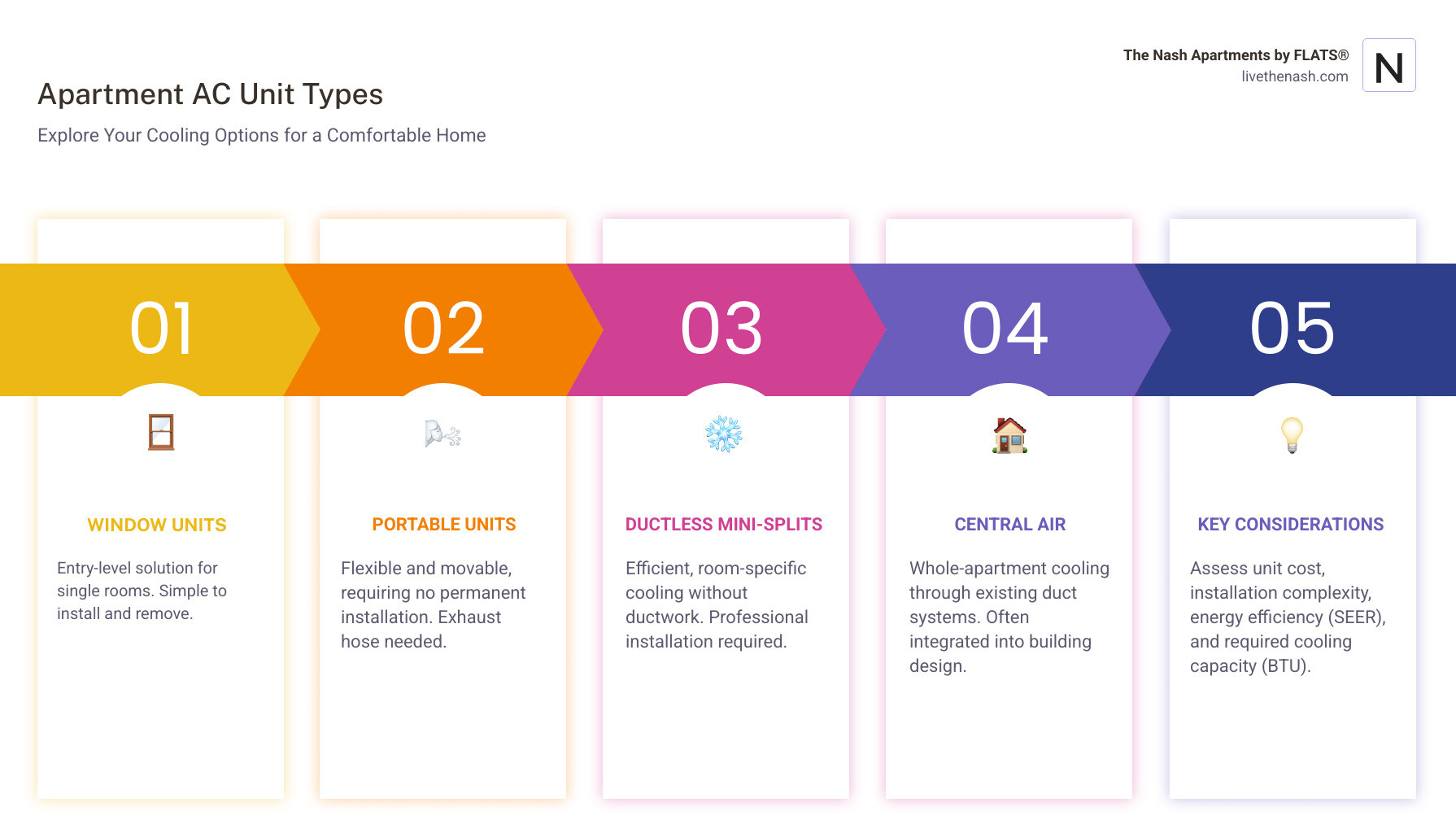
Quick Overview of Apartment AC Options:
- Window Units: An entry-level solution for single rooms
- Portable Units: Flexible, no installation required
- Ductless Mini-Splits: Efficient, room-specific cooling without ductwork
- Central Air: Whole-apartment cooling through existing duct systems
Several factors shape the selection of an AC system. The type of unit chosen makes the biggest difference. A window unit represents a more straightforward setup, while a ductless mini-split needs professional installation. Cooling capacity, measured in British thermal units (BTU), must match the space size. Energy efficiency ratings like SEER (Seasonal Energy Efficiency Ratio) impact long-term operational resources. Finally, a building's existing infrastructure and any installation requirements play a significant role.
Whether a renter or owner, understanding these elements helps in selecting the right cooling solution for a space. Modern apartment communities in San Diego often provide premium amenities that include climate control options designed for comfort and efficiency.
Understanding the Factors That Influence Air Conditioning Unit Considerations for an Apartment
Choosing the right cooling solution for an apartment involves more than just selecting a unit; it's about understanding the intricate web of factors that influence the overall commitment. From the initial selection to the long-term operational resources, each decision made plays a part in comfort and planning.

When considering the factors for an air conditioning unit cost apartment dwellers encounter, several key elements come into play:
- Unit Type: As seen, there's a spectrum of options, each with its own level of complexity and resource requirements.
- Cooling Capacity (BTU): This refers to the unit's ability to remove heat from a space. A unit that's too small will struggle, while one that's too large can cycle inefficiently.
- Energy Efficiency: Measured by ratings like SEER, this impacts monthly utility usage.
- Brand Reputation: Established brands often come with a perceived quality and reliability, which can influence the initial selection.
- Installation Complexity: Some units simply plug in, while others require extensive professional work.
The journey to a cooler apartment begins with exploring these factors in detail. Understanding how they intertwine helps in making informed choices that align with needs and lifestyle in San Diego. The Seasonal Energy Efficiency Ratio (SEER) is a crucial metric that measures the cooling efficiency of air conditioning equipment over a typical cooling season, similar to how a car's fuel efficiency is measured. This ratio is calculated by dividing the total cooling provided by the air conditioner over the cooling season in British Thermal Units (BTU) by the total electrical energy consumed in watt-hours during the same period. This metric helps gauge the long-term operational resources of a unit. For more information on SEER, refer to Seasonal energy efficiency ratio (SEER).
Exploring Different AC Unit Types
The type of air conditioner chosen is perhaps the most significant determinant of the overall commitment. Each system offers distinct advantages and comes with varying levels of initial and long-term resource commitment.
- Central Air: This system provides whole-apartment cooling, circulating air through a network of ducts. It's often integrated into the building's infrastructure, offering a seamless and consistent cooling experience.
- Ductless Mini-Splits: These systems offer zoned cooling, meaning the temperature can be controlled in individual rooms or areas. They don't require extensive ductwork, making them a flexible option for apartments without existing ducts.
- Window Units: A common choice, window units are installed directly into a window opening. They provide cooling to a single room and are generally straightforward to set up.
- Portable Units: These freestanding units offer mobility and don't require permanent installation. They can be moved from room to room as needed, venting hot air through a hose to a window.
Each type presents a different level of initial and long-term resource commitment. For those seeking modern living, understanding these distinctions is key. Modern apartments in San Diego are designed with comfort in mind, offering various climate control solutions. To learn more about the lifestyle offered, please visit Modern Apartments San Diego.
The Impact of Size and Energy Efficiency
Beyond the type of unit, its size and energy efficiency are paramount.
Proper Sizing: An air conditioner's cooling capacity is measured in British Thermal Units (BTU). Choosing the correct BTU for an apartment's size is vital. An undersized unit will run constantly, struggling to cool the space, leading to increased operational resources. Conversely, an oversized unit will cool too quickly, cycling on and off frequently, which can result in uneven temperatures and reduced dehumidification. For a deeper dive into how cooling capacity is measured, explore British thermal units (Btu). Factors like ceiling height, insulation quality, window type and orientation, and even the number of occupants influence the ideal BTU requirement.
SEER Ratings: The Seasonal Energy Efficiency Ratio (SEER) is a measure of an air conditioner's cooling output during a typical cooling season, divided by the total electric energy input during the same period. A higher SEER rating indicates greater energy efficiency. While units with higher SEER ratings may represent a more significant initial commitment, they can lead to substantial long-term operational resource efficiencies, especially in warmer climates like San Diego. For example, units with a SEER rating of 16 or higher are generally recommended for better energy efficiency.
Long-term operational resources: A more energy-efficient unit can result in lower monthly utility usage. Over the lifespan of the unit, this efficiency can be a significant factor. Many energy-efficient models also come with ENERGY STAR certifications, indicating they meet strict energy efficiency guidelines set by the U.S. Environmental Protection Agency. There may even be opportunities for incentives or credits when choosing these systems.
A Comparison of Apartment Air Conditioner Options
Considering the diverse needs of apartment living, it's clear that one-size-fits-all cooling solutions simply don't exist. This section compares the most common systems for apartment living, highlighting their unique characteristics and installation considerations, helping to navigate the air conditioning unit cost apartment landscape.

Central Air Conditioning Systems
Central air conditioning offers comprehensive cooling for an entire apartment, distributing conditioned air through a system of ducts. This type of system is often found in newer or renovated apartment buildings, providing a consistent and comfortable indoor climate.
- Whole-apartment cooling: Central AC ensures that every room connected to the ductwork receives cooling, providing a uniform temperature throughout the living space.
- Requires existing ductwork: For central air to be a viable option, the apartment must already have a system of ducts in place. Installing new ductwork can be a substantial undertaking, often not practical or permissible in many apartment settings.
- Integrated appearance: Since the main cooling unit is typically located outside and the air is delivered through vents, central air systems offer a discreet and aesthetically integrated appearance within the apartment.
- Often found in newer or renovated apartment buildings: Many modern apartment complexes, including luxury living spaces in San Diego, incorporate central air as a standard amenity. This ensures residents experience premium comfort. Explore more about apartments offering this amenity at Apartments with Central Air. For a deeper understanding of how central air conditioning works, the U.S. Department of Energy provides valuable insights at Central Air Conditioning.
Ductless Mini-Split Systems
Ductless mini-splits have become an increasingly popular choice for apartments, particularly when central air is not an option or when zoned cooling is desired. These systems consist of an outdoor compressor/condenser and one or more indoor air-handling units, connected by a conduit rather than extensive ductwork.
- Zoned cooling for specific rooms or areas: This allows for cooling only the areas in use, potentially leading to more efficient operational resource use. For instance, a living room can be cooled during the day and a bedroom at night without conditioning the entire apartment.
- No ductwork required: This is a major advantage for apartments, as it bypasses the need for extensive and intrusive duct installation. It makes mini-splits a flexible solution for older buildings or those with layouts unsuitable for traditional ducts.
- Flexible installation options: Indoor units can be mounted on a wall, ceiling, or floor, offering versatility to blend with an apartment's design.
- Quiet operation: Mini-split systems are known for their quiet performance, contributing to a peaceful living environment. The U.S. Department of Energy offers more details on these efficient systems at Ductless Mini-Split Heat Pumps. For those residing in communities that prioritize modern conveniences, ductless mini-splits can be an excellent fit. To explore modern apartments, visit Modern Apartments in San Diego.
Window and Portable AC Units
For many apartment dwellers, window and portable AC units remain the most accessible and practical cooling solutions. These options are ideal for single-room cooling and situations where more extensive systems aren't feasible or permitted.
- Room-by-room cooling: Both types are designed to cool individual spaces, making them suitable for apartments where only one or two rooms need to be conditioned.
- Simple installation: Window units are installed in a window opening, often with minimal tools. Portable units are freestanding and simply require an exhaust hose to be directed out a window. For more information on room air conditioners, including window units, check out the U.S. Department of Energy's guide: Room Air Conditioners.
- A common choice where other systems aren't feasible: In many older apartment buildings or those with strict modification rules, window and portable units offer a straightforward way to beat the heat.
- Considerations for window access and building rules: Before opting for a window unit, it is important to ensure the apartment windows are suitable for installation and that building management permits their use. Portable units offer more flexibility in this regard, as they don't require permanent window obstruction.
Beyond the Unit: Installation and Long-Term Considerations
The journey to a comfortably cool apartment doesn't end with selecting the right unit. The initial selection is only part of the equation; professional installation, ongoing maintenance, and the unit's lifespan all contribute to the overall performance and sustained comfort of the system. Understanding these aspects helps to gain a complete picture of the air conditioning unit cost apartment considerations residents might have over time.
Professional Installation and Other Requirements
While some smaller units might seem like a DIY project, complex systems like central air or ductless mini-splits require professional installation. Improper installation can lead to inefficiencies, higher operational resources, and even safety concerns.
- Electrical work: Many AC units require dedicated electrical circuits or upgrades to an apartment's electrical system. This work must be performed by a licensed electrician to ensure safety and compliance with local codes in San Diego.
- Building regulations and permits: Depending on the type of unit and the extent of installation, local building codes in San Diego may require permits. A building's management will also have specific rules regarding modifications to the property. It's crucial to consult with them before making any changes.
- Labor considerations: Professional installation includes the skill of HVAC technicians, who ensure the unit is correctly sized, installed, and tested for optimal performance. This labor is a significant portion of the initial process for more complex systems.
- Ensuring proper and efficient function: A professionally installed system is more likely to operate efficiently, providing consistent cooling and potentially reducing long-term operational resources.
- Importance of consulting with building management: Before committing to any AC solution, especially for central or ductless systems, it is important to engage with building management. They can advise on permissible unit types, installation guidelines, and any necessary approvals, helping to avoid unexpected complications.
Lifespan, Maintenance, and Long-Term Considerations
An air conditioner is a significant appliance, and its longevity and performance are directly linked to how well it's maintained.
- Typical lifespan of different unit types: The lifespan of an AC unit varies by type. For instance, central air conditioning systems can often last between 15 to 20 years with proper care. Ductless mini-splits might offer a similar or slightly longer lifespan. Window and portable units, being less complex and often subject to more wear and tear, typically have a shorter lifespan, ranging from 5 to 10 years.
- Routine maintenance needs: All AC units benefit from regular maintenance. This includes tasks like cleaning or replacing air filters, ensuring coils are free of debris, and checking refrigerant levels.
- Filter changes: This is perhaps the simplest yet most effective maintenance task. Regularly changing filters ensures adequate airflow, which is critical for the unit's efficiency and the air quality in the apartment.
- Annual servicing: An annual professional inspection is recommended, ideally before the peak cooling season. A technician can identify potential issues early, clean components, and ensure the system is running at its best. This proactive approach can extend the unit's lifespan and prevent extensive breakdowns.
- How efficiency impacts long-term operational resources: A well-maintained and energy-efficient unit will consistently deliver comfort using fewer resources, leading to lower monthly utility usage over its operational life.
Navigating the Air Conditioning Considerations for Apartment Dwellers
Understanding the logistical aspects of apartment AC is particularly nuanced, especially for renters.
- Renter vs. owner considerations: If one owns their apartment or condominium, they typically have more freedom to choose and install the AC unit that best suits their needs, provided they adhere to building regulations. For renters, options are usually more limited, often to portable or window units, unless the apartment comes with a built-in system.
- Reviewing lease agreements: A lease agreement is the primary guide. It will outline what types of appliances are permitted, who is responsible for maintenance, and whether any modifications to the apartment are allowed.
- Understanding building policies on modifications: Even if a lease doesn't explicitly forbid a certain type of AC, building policies might. These can cover everything from the aesthetic impact of outdoor units to electrical load capacities. Consulting building management or the landlord is always the best first step.
For those residing in communities like The Nash, where modern living is a priority, apartments are often equipped with advanced systems and are committed to providing a comfortable environment. The importance of connectivity in modern life is also a consideration; for more on that, visit Apartments with Fast Internet.
Frequently Asked Questions about Apartment AC Units
Choosing and maintaining an air conditioner for an apartment can raise many questions. Here are some of the most common inquiries regarding the air conditioning unit cost apartment residents might consider, with clear and helpful guidance.
How is the right size AC for an apartment determined?
Determining the correct AC unit size is crucial for both comfort and efficiency. An improperly sized unit will lead to wasted resources and discomfort.
To determine the right size, several factors must be considered:
- Square footage of the space: This is the most basic starting point. General guidelines suggest a certain BTU per square foot, but this is just a rough estimate.
- Ceiling height: Taller ceilings mean a larger volume of air to cool, requiring more capacity.
- Sun exposure: Apartments that receive direct sunlight for much of the day will require a unit with greater cooling power.
- Window quality: Well-insulated, energy-efficient windows can reduce the load on an AC, while older, less efficient windows will increase it.
- Number of occupants: More people in a space generate more body heat, increasing the cooling demand.
- Heat-generating appliances: Kitchens with ovens and stovetops, or rooms with many electronics, will also contribute to heat buildup.
An undersized unit will struggle to cool the space to the desired temperature, running continuously and consuming excessive resources without achieving comfort. On the other hand, an oversized unit will cool the space too quickly, leading to frequent on-off cycling. This "short cycling" prevents the unit from effectively dehumidifying the air, leaving the apartment feeling damp and clammy, and also puts undue stress on the system components, potentially shortening its lifespan.
The best approach is to consult building management or a qualified HVAC professional in San Diego. They can perform a detailed load calculation, often referred to as a Manual J calculation, which takes into account all these variables to recommend the optimal BTU capacity for a specific apartment. For additional insights on sizing, refer to What Size AC Unit Do I Need?.
What is a SEER rating and why is it important?
SEER stands for Seasonal Energy Efficiency Ratio. It is a metric used to measure the cooling efficiency of an air conditioner or heat pump over a typical cooling season.
- How it works: The SEER rating is calculated by dividing the total cooling output (in BTUs) during a typical cooling season by the total electrical energy input (in watt-hours) during the same period.
- Why it's important: A higher SEER rating indicates greater energy efficiency. This means the unit can provide the same amount of cooling while consuming less electricity. For residents, particularly in a warm climate like San Diego, a higher SEER rating translates directly to lower operational resource use over time, helping to manage monthly utility usage. While units with higher SEER ratings may have a higher initial commitment, the long-term efficiency can be a significant factor.
How often should an apartment AC unit be serviced?
Regular servicing is key to maintaining an AC unit's efficiency, extending its lifespan, and ensuring it operates reliably when it is needed most.
- Annual inspection: Most professionals recommend an annual inspection, ideally before the warm season begins. For residents in San Diego, this typically means scheduling a check-up in late spring. During this service, a technician will clean coils, check refrigerant levels, inspect electrical components, and ensure all parts are functioning correctly. This proactive approach can catch minor issues before they become major, extensive repairs.
- Routine filter maintenance: Beyond professional servicing, regular filter cleaning or replacement is crucial. The frequency depends on the type of filter, unit usage, and environmental factors (like pets or dust). Following the manufacturer's recommendations is advised, which often suggest checking filters monthly and replacing them every one to three months. A clean filter ensures proper airflow, which is essential for the unit's efficiency and for maintaining good indoor air quality. Neglecting filter changes can lead to reduced cooling performance, increased operational resources, and potential damage to the unit.
Conclusion: Finding Your Cool in a Modern Apartment
Choosing the right air conditioner for an apartment is a balance of initial commitment, long-term operational resources, and personal comfort. Understanding the different types of units, their efficiency ratings, and the installation requirements empowers one to make an informed decision that suits a lifestyle and living situation in San Diego. Whether it's the comprehensive cooling of central air, the targeted comfort of a ductless mini-split, or the practical simplicity of a window or portable unit, each option plays a vital role in creating an ideal indoor environment.
At The Nash, modern living is synonymous with comfort and convenience. The luxury apartments are thoughtfully designed with premium features, including advanced climate control options, to ensure residents can always find their cool. The nuances of air conditioning unit cost apartment considerations are understood, and the goal is to provide a living experience where such factors are seamlessly integrated into a lifestyle of ease.
Explore the amenities that support luxury living in San Diego, designed to improve every aspect of daily life. From the rooftop lounge to the state-of-the-art fitness center, The Nash offers an unparalleled experience where every detail contributes to resident well-being. Visit Explore the amenities that support luxury living in San Diego to find more.