

Making the Smart Choice for Your Laundry Needs
Washer dryer apartments offer a level of convenience that can transform your daily routine. If you're searching for an apartment with in-unit laundry, you'll want to understand your options and what factors matter most before signing a lease.
Quick Answer: What Are Washer Dryer Apartments?
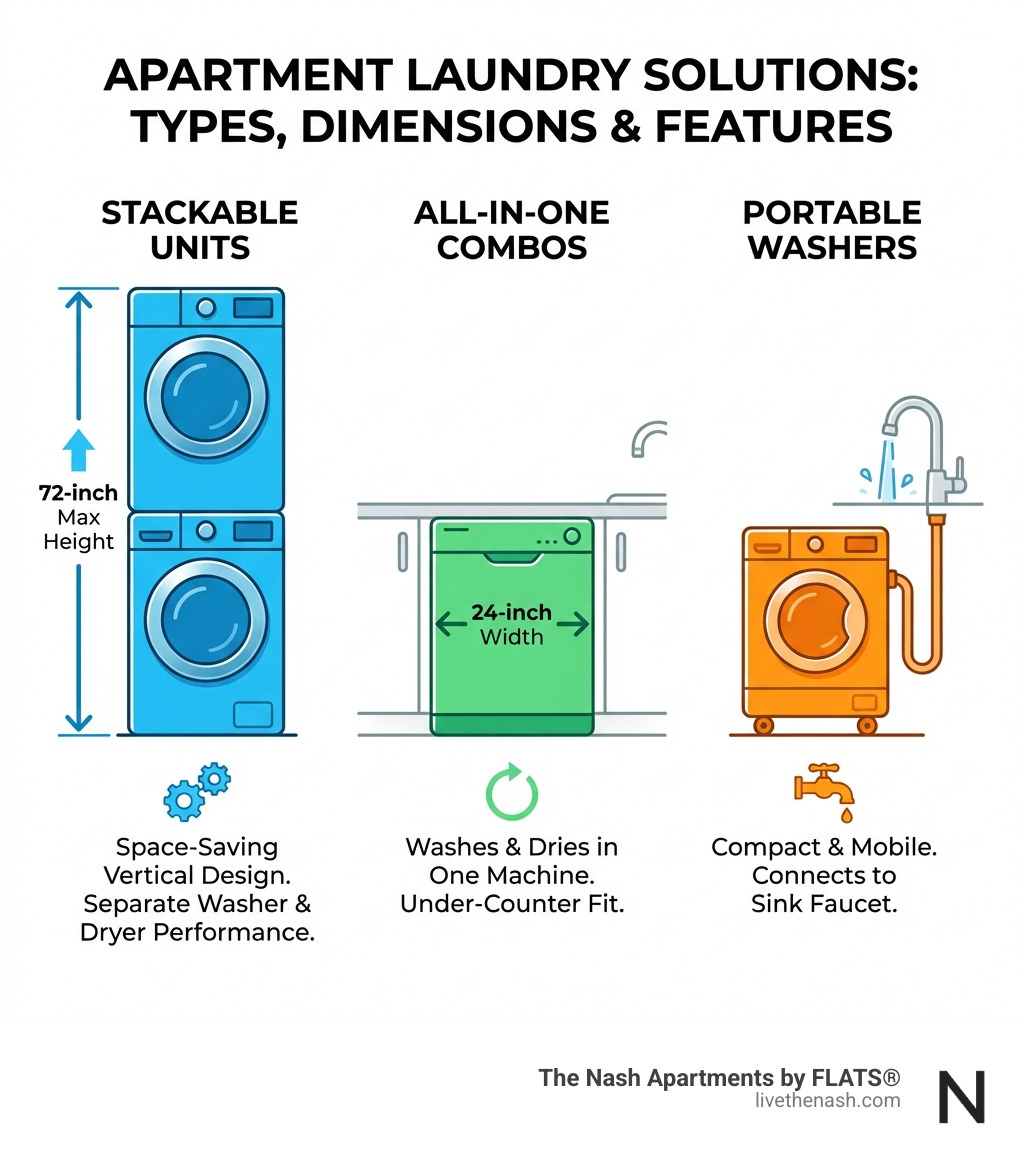
Washer dryer apartments are rental units that include laundry appliances inside your living space. Here are the three main types you'll encounter:
- Stackable Units - Washer and dryer stacked vertically to save floor space
- All-in-One Combos - Single appliance that washes and dries in one machine
- Portable Units - Compact machines that connect to your sink
Why This Decision Matters
For many renters, having a washer and dryer in their unit is a convenient, time-saving amenity. You avoid hauling heavy baskets of clothes to an on-site laundry facility or laundromat. You do laundry on your own schedule, without waiting for machines or worrying about someone else moving your clothes.
But not all in-unit laundry setups are created equal. Some apartments come with appliances already installed. Others have hookups that require you to bring your own machines. The type of unit, space requirements, and features can vary significantly.
Understanding Your Options
Typical apartment-sized washers and dryers are 24 inches wide, ranging from 24 to 26 inches deep and 33 to 36 inches tall. When stacked, these units can reach up to 72 inches tall. All-in-one washer-dryers are about the size of a dishwasher and can fit under a standard kitchen counter.
Each configuration has advantages and trade-offs. Stackable units maximize vertical space. All-in-one combos eliminate the need to transfer clothes between machines but can take three to six hours for a complete cycle. Portable washers offer flexibility for temporary living situations.
1. You Prioritize Convenience and Your Personal Schedule
One of the biggest draws of washer dryer apartments is the convenience they offer. Imagine this: you wake up, realize you're out of clean socks, and instead of planning a trip to a communal laundry room or laundromat, you simply toss a load into your in-unit machine. No more juggling laundry baskets in elevators or across parking lots.
Having a washer and dryer inside the apartment means laundry fits your routine instead of the other way around. Whether it's a late-night wash, an early morning dry, or a quick cycle between errands, you can handle clothes on your timeline. This on-demand access is especially helpful for busy schedules or households that go through a lot of laundry.
The Multi-housing Laundry Association suggests that buildings should ideally have a washer and dryer for every 10–20 units of "working adults" in shared facilities. While this offers a guideline for communal spaces, it also highlights the potential for waiting times and competition for machines. With an in-unit setup, those concerns disappear. There is no awkward wait for an open machine and no wondering whether someone else has moved your clothes.
You also reduce the effort involved. Eliminating trips to off-site facilities or even a shared basement laundry room saves time and energy. There is no need to locate change or prepaid laundry cards, and your clothes remain within your personal space. For many renters, that added privacy and control is a key reason they seek out washer dryer apartments.
2. You Have a Designated and Properly Measured Space
Before committing to washer dryer apartments, a crucial first step is to make sure you have the right fit – literally. Measuring the available space is essential so your laundry setup slides in smoothly and functions safely.
Apartment-sized washer and dryer dimensions can vary, so be precise. Measure the width, depth, and height of the area where the appliances will go, including from the floor to the bottom of any shelves or cabinets above. It is not just about floor space; you also need room for doors and lids. A top-load washer, for example, needs space above it for the lid to open fully, while front-load washers and dryers need clear swing room for their doors.
Appliances also need ventilation space. Plan for at least an inch of clearance on each side of the washer and dryer to support airflow. For the dryer, allow extra room behind it for vents and hookups to prevent kinks in hoses and to support safe operation.
Typical apartment-sized washers and dryers are compact, usually around 24 inches wide. They generally range from 24 to 26 inches deep and 33 to 36 inches tall. If you opt for a stackable setup using a laundry-stacking kit, a small stackable washer and dryer combo can reach up to about 72 inches tall. An all-in-one washer-dryer is often about the size of a dishwasher, which makes it versatile enough to fit under a standard kitchen counter, in a bathroom, or inside a closet. Careful measuring up front makes it easier to choose a configuration that fits your layout.
3. You Understand the Different Types of Washer Dryer Apartments
Navigating the options for washer dryer apartments becomes much easier once you understand the main types of laundry setups. The goal is always to make the most of your available space while meeting your laundry needs. Different units achieve this in different ways, so you can match an appliance style to your apartment's layout.

Stackable and Stacked Laundry Centers
When floor space is limited, vertical space can be a smart solution. Stackable washers and dryers are designed to sit one on top of the other, reducing the footprint while keeping full-size functionality. These typically consist of front-load pairs, connected securely with a stacking kit.
Stacked laundry centers take the idea a step further. They combine the washer and dryer into a single, unitized appliance, with the washer on the bottom and the dryer above. These units come in common widths like 20–24 inches and 24–30 inches and can tuck into closets or dedicated laundry niches. Stackable steam front-load washer and dryers, for example, are a strong option for smaller laundry spaces where every inch counts. For more details on these space-saving solutions, you can explore the guide on Apartment Size Washer Dryer Combo.
All-in-One Washer Dryer Combos
All-in-one washer dryer combos, also known as All-In-One Washer & Dryers, handle washing and drying in a single appliance. The big benefit is that you do not need to move clothes between machines. Load your laundry, choose the settings, and let the unit progress from wash to dry.
These machines are often about the size of a dishwasher and can fit under a standard kitchen counter, in a bathroom, or in a closet. Many all-in-one units use ventless technology, so they do not require an external exhaust duct. This offers extra flexibility in apartments where external venting is not available. A complete wash-and-dry cycle in an all-in-one unit can take anywhere from three to six hours, depending on the model, so they are particularly well-suited for smaller, steady loads. To learn more about ventless options, take a look at the article on the Best Apartment Washer Dryer Combo Ventless.
Portable Washers and Dryers
Portable washing machines and dryers offer flexibility for apartment living. These compact appliances are designed for smaller spaces or temporary setups. Most portable washers are top-load models. Some connect directly to a sink or bathtub faucet for water intake and drain into the same fixture, while others can be connected to more permanent water and drain lines.
Because they are lightweight and often on wheels, portable units can be moved into place when needed and stored away when not in use. Drum sizes are smaller, often between 1.6 and 2.6 cubic feet, with a 1.6-cubic-foot machine typically handling up to about 11 pounds of dry clothing. Portable dryers are available as well and usually run on standard household electricity, making them a good solution for modest loads and compact spaces.
4. Your Unit Has the Necessary Hookups and Venting
Once you have identified your ideal laundry setup, the next step is confirming that your apartment can support it. Understanding installation requirements and coordinating with property management are both important when planning washer dryer apartments.
Before bringing in appliances, check for existing washer and dryer connections. This typically includes:
- Water Supply Lines: Hot and cold water lines for the washer.
- Drainage Options: A standpipe or sink for the washer's drain hose.
- Electrical Outlets: A standard 120-volt outlet for most washers and some dryers; many electric dryers require a dedicated 240-volt outlet.
- Gas Connections: If you are considering a gas dryer, you will need a gas line hookup.
Always confirm with building management that washer and dryer installation is allowed, especially if you plan to bring your own units. They can clarify building codes, any weight or location limitations, and whether approvals or permits are required.
Vented vs. Ventless Dryers
Dryer venting is one of the most important considerations when planning in-unit laundry.
Vented Dryers: These are common in many homes. They heat air, tumble clothes in it, and exhaust the hot, humid air outside through a duct. Vented dryers tend to dry clothes faster than most ventless models but need to be installed where an exterior vent or window ducting is possible. Gas dryers must be vented outdoors to exhaust combustion byproducts safely.
Ventless Dryers: Ventless dryers do not use an external vent. Instead, they recirculate air inside the machine. There are two primary types:
- Condenser Dryers: These remove moisture from the air and collect it in a removable tank or drain it away.
- Heat Pump Dryers: These use a heat pump system to dry clothes with lower energy use compared to many conventional dryers.
The main advantage of ventless dryers is installation flexibility. They can often be placed in interior spaces, including closets or under counters, because they do not require an exterior wall vent. The trade-off is that drying cycles usually take longer than with vented models. Ventless condenser dryers can release some heat and humidity into the surrounding room, so it is helpful to ensure that the area has adequate airflow.
5. You Know Which Features Matter Most to You
Once you have the space and hookups sorted, the next step is choosing features that match how you like to do laundry in your washer dryer apartments. Not every machine offers the same options, so it helps to decide what matters most before you shop.
Let's look at a few key feature categories:
| Feature | Small/Compact Units (e.g., portable, some all-in-one) | Standard Apartment-Sized Units (e.g., stackable, WashTower) |
|---|---|---|
| Capacity | Typically 1.6–2.6 cu. ft. (washer) | Often 2.4–5.5 cu. ft. (washer) / 3.4–8.0 cu. ft. (dryer) |
| Energy Efficiency | Varies; some compact models are efficient | Many models are ENERGY STAR ae certified; heat pump dryers excel |
| Noise Level | Varies; look for quiet-operation features | Look for vibration reduction technology and quiet cycles |
| Common Cycles | Basic wash/dry cycles | Steam, Sanitize, Quick Wash/Dry, Delicates, Bulky, Allergen |
Capacity
Capacity describes how much laundry you can wash or dry at once. For individuals or smaller households, compact models in the 1.6–2.6 cubic foot range may be sufficient. A 1.6-cubic-foot washer, for example, can typically handle around 11 pounds of dry clothing. If you prefer fewer, larger loads, apartment-sized stackable units with washers in the 4.0–5.5 cubic foot range and dryers from about 7.0 to 8.0 cubic feet can be a better fit.
Energy Efficiency
Modern front-load washers and many compact units are designed to use water and energy efficiently. Look for the ENERGY STAR ae label when comparing options. Ventless heat pump dryers are especially strong performers in this area and can use significantly less energy than many traditional vented models.
Noise Level
Laundry spaces in apartments are often close to living rooms or bedrooms. To keep cycles from becoming disruptive, look for washers and dryers that mention noise reduction features, such as improved insulation or vibration control. This can make it easier to run a load early in the morning or later in the evening.
Cycles and Advanced Features
Beyond basic wash and dry, many machines include:
- Steam Technology: Available on many front-load washers, steam can help address stains and support fabric care.
- Sensor Dry: Dryers with moisture sensors can shut off automatically when clothes reach the desired dryness level.
- Smart Features: Wi-Fi connectivity and app control are becoming common. These features can let you start, pause, or monitor cycles from your phone.
- Dispensers: Automatic dispensers for detergent, fabric softener, or bleach simplify measuring and help deliver consistent results.
Whether you are leaning toward a compact model or a more robust stackable pair, understanding these features can help you create a laundry setup that fits smoothly into your routine. Exploring options like an Apartment Size Whirlpool Washer can be a good way to compare specific feature sets.
6. You're Prepared for In-Unit Appliance Care
Having a washer and dryer inside your apartment is a valuable amenity, and a bit of upkeep goes a long way toward keeping everything running smoothly. When considering washer dryer apartments, it helps to think about ongoing care and who handles repairs.
Start by reviewing your lease. Some communities provide appliances and manage all routine maintenance, while others may offer hookups and expect residents to supply and maintain their own machines. It is also a good idea to confirm how any water-related incidents are handled and to review coverage under your rental insurance.
Maintenance and Safety in Washer Dryer Apartments
Clothes dryer care is important for both performance and safety. The U.S. Fire Administration (FEMA) notes that many home clothes dryer fires can be prevented with simple maintenance habits.
- Clean the Lint Trap: Clean the dryer lint screen after every load. This supports proper airflow and helps reduce fire risk. If needed, you can slightly dampen lint before removing it to keep particles from becoming airborne.
- Check Ventilation: Over time, lint can accumulate in the vent hose or exterior vent. Keeping these clear supports efficient drying and reduces the chance of overheating. Some residents may clean the accessible hose sections themselves, while buildings may arrange periodic professional vent cleaning.
- Prevent Mold and Odors: For washing machines, especially front-load models, wipe down the rubber door seal to remove moisture and residue. Leaving the washer door slightly open between cycles helps the drum dry out and can reduce odors.
- Run Cleaning Cycles: Many washers include a dedicated cleaning cycle. If yours does not, periodically running a hot water cycle with a cup of white vinegar and a half-cup of baking soda can help remove buildup and freshen the drum.
- Avoid Overloading: Overstuffing the washer or dryer can strain components, lengthen cycle times, and lead to less effective cleaning and drying.
Consistent, simple maintenance keeps your laundry area comfortable and functional. For more information on preventing dryer-related fires, you can refer to the FEMA reports on clothes dryer fire prevention.
7. You Know How to Search for the Right Apartment
Once you understand your laundry priorities, you can use that knowledge to guide your apartment search for washer dryer apartments. Clear criteria make it easier to spot listings that match your needs.
Most rental listing platforms include filters such as "Washer/Dryer In Unit" or "W/D Connections." Use these filters early in your search, whether you are exploring options near North Park, University Heights, or other San Diego neighborhoods.
It is helpful to understand the terms you will see:
- "In-Unit Laundry": The apartment includes a washer and dryer already installed.
- "W/D Hookups": The space is prepared with plumbing, electrical, and venting, but you may need to bring your own machines.
After you have identified promising options, touring the apartment and asking follow-up questions can clarify how the laundry setup actually works day to day.
Here are some questions to ask property managers about in-unit laundry:
- Are the washer and dryer included with the apartment, or does it only have hookups?
- If appliances are included, what are their dimensions and capacity?
- Have the appliances been recently serviced or inspected?
- What type of dryer is it – vented or ventless? If vented, where does the vent exhaust?
- What are the electrical requirements for the machines (120V or 240V)?
- Who is responsible for maintenance and repairs of the washer and dryer?
- Are there any community guidelines or quiet hours for using the laundry machines?
- Is there enough clearance for the washer and dryer doors or lids to open fully?
- Can we see the actual hookups and the space where the machines will go?
By combining online filters with detailed questions and an in-person look at the laundry area, you can better identify apartments that provide the in-unit laundry experience you are looking for. Resources like Apartments.com and ApartmentList can help you explore Apartments for Rent with Washer & Dryer in San Diego CA, the 100 Best Apartments for Rent with Washer-Dryers in San Diego, CA, Apartments for Rent with Washer & Dryer in North Park, San Diego, Apartments with Washer and Dryer in North Park, San Diego, CA, and San Diego with Washer & Dryer in University Heights.
Frequently Asked Questions about In-Unit Laundry
What is the difference between "in-unit laundry" and "laundry hookups"?
"In-unit laundry" means the appliances (washer and dryer) are already provided within your apartment for your use. "Laundry hookups" means the apartment has the necessary water, power, and vent connections, but you may need to provide your own machines.
Are all-in-one washer dryer combos a good option?
All-in-one units are excellent for saving space as they wash and dry in a single machine. They are often ventless, allowing for flexible installation in various locations. However, their wash-and-dry cycles can typically take longer (three to six hours) than using separate washer and dryer machines.
What are the main types of apartment-sized laundry units?
The three main types are stackable washer and dryer sets that save floor space by stacking vertically, all-in-one combo units that wash and dry in one machine, and portable units that can be connected to a sink for temporary use and easy storage.
Conclusion
Deciding if washer dryer apartments are right for you comes down to a few key questions. Do you value on-demand laundry access? Is there a properly measured space in your layout? Do you understand the main types of units and how they fit different floor plans? Does your apartment have the right hookups and venting? Have you identified the features you care about most and considered basic maintenance needs? Finally, do you know how to search for and evaluate listings that match these priorities?
When these pieces are in place, in-unit laundry can become a seamless part of everyday living, freeing up more time for the things you enjoy around San Diego, from the energy of North Park to the charm of University Heights.
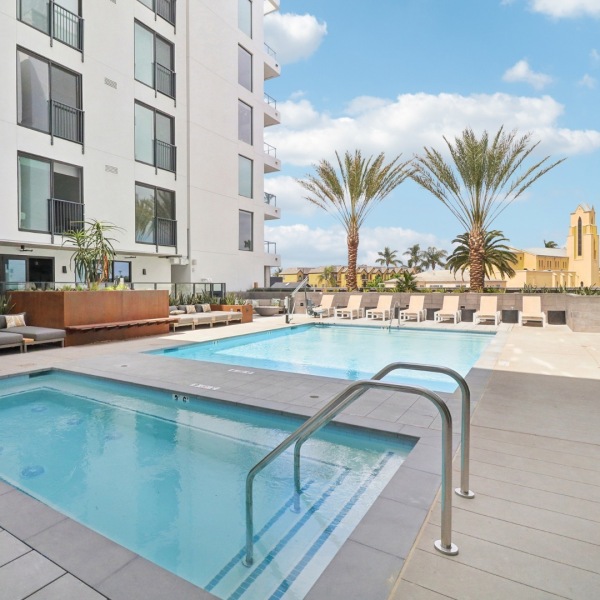
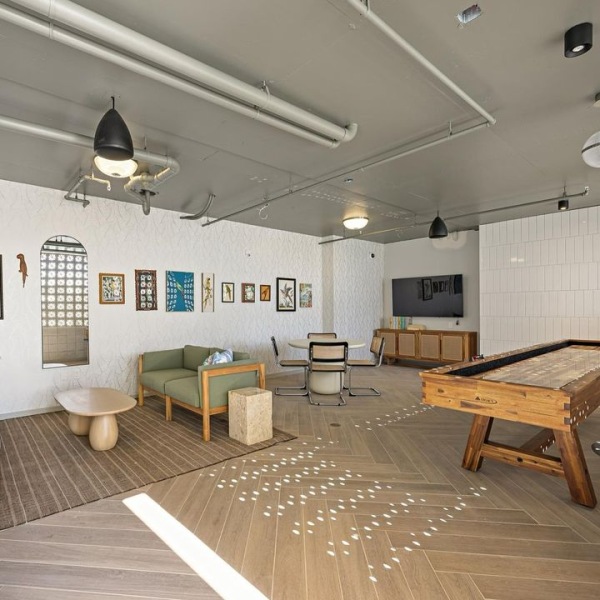
At The Nash Apartments, modern amenities are designed to complement that lifestyle, with features like a rooftop lounge, EV chargers, a sparkling pool, a relaxing hot tub, a co-working lounge, poolside cabanas, an open-air game room, and a two-story fitness center. These spaces create a comfortable backdrop for residents who value convenience and style.
Ready to explore more of what The Nash has to offer? Discover our community amenities and see how they align with your ideal apartment experience.